The Story ofMichinoku Gold

Ofunato
Ofunato
Hiking Among Nature and History

Day 1 Downtown Ofunato and Craftsmanship
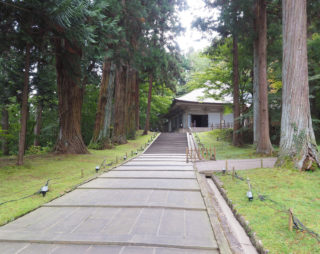
Our first morning in Ofunato began under a canopy of cedar trees.
Maki Onodera

We enjoyed a light hike to the Fudo Falls, where the water deity Fudō Myō (Acala), one of the Five Great Wisdom Kings, is enshrined between the “Odaki” (male waterfall) on the right and the “Medaki” (female waterfall) on the left. The two waterfalls merge into a picturesque river that you can follow along the Michinoku Coastal Trail, surrounded by countless cedars and the sound of flowing water. In front of the shrine, there is a hut made with the characteristic craftsmanship of the Kesen carpenters.
A deep respect for nature can be felt in the walk leading up to the shrine.
Afterwards, we enjoyed lunch featuring abundant offerings of the Sanriku coast’s characteristic seafood.
Maki Onodera

Early in the afternoon, we explored what I consider one of the most impressive sights in Ofunato: the massive merchant ship Kesenmaru.
Maki Onodera

Despite having spent nearly 30 years afloat in Ofunato Bay, the ship is kept in remarkable condition, and visitors can even step inside to see the craftsmanship of the Kesen carpenters up close.
The ship is made almost entirely from local Kesen wood, with enormous single-log pieces used for the mast and rudder. There are almost no metal fittings; instead, all mechanisms, including the modular floorboards and the wooden system that retracts the colossal rudder, are crafted entirely from wood. This allows the ship’s interior to be reconfigured depending on its cargo or when navigating shallow waters.
Maki Onodera

The pragmatic mysticism embedded in the ship felt deeply characteristic of Japanese maritime culture. Vessels like the Kesenmaru contain small shrines onboard, where deities are enshrined to protect the ship and crew, a meaningful insight into pre-modern beliefs and daily life.
Maki Onodera

Later in the afternoon our exploration of craftsmanship continued at Kamome Terrace.
Maki Onodera

Here you can enjoy gourmet sweets and shop for one of Ofunato and Iwate’s most famous souvenirs, Kamome no Tamago (“seagull eggs”), a confection with over 60 years of history and numerous variations. Inside the terrace, a small exhibit explains the painstaking process behind its distinctive egg shape. To commemorate Hiraizumi’s temples and culture of gold being designated as a World Heritage Site, a golden Kamome no Tamago inspired by Hiraizumi’s Chuson-ji Konjiki-do was also released.
Maki Onodera

We tasted the Mini Kamome no Tamago, a delightful little snack and an excellent souvenir.
Maki Onodera

A short walk away, we tried another notable local product: Tsubaki Tea, inspired by the resilience of the Sanriku coastline.
Maki Onodera

I was deeply impressed by its gentle aroma and naturally sweet flavor, despite having no sugar, sweeteners, or calories. The story behind the tea was as moving as its fragrance: camellias tended by hands that might otherwise go unseen, each leaf carrying a quiet but proud resilience.
Maki Onodera

When the Great East Japan Earthquake struck on March 11, 2011, most trees were uprooted by the massive tsunami, but the deeply rooted camellias endured. This inspired the founder of Banzai Factory Co., Ltd., who built an entire product line around the strength and elegance of the Sanriku camellia. In the language of flowers, the camellia signifies unpretentious elegance and pride. The Story of the Sanriku Camellia carries these qualities forward.
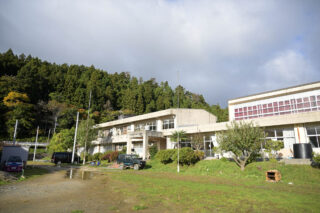
For dinner and our overnight stay, we visited Sanriku Active, a former elementary school now converted into a dormitory.
Maki Onodera

We cooked local seafood in the old school kitchen, and I was impressed by how every part of the squid was used, the organs for the sauce, the tentacles fried in that sauce, and then the mantle fried separately. The final meal included simmered saury fish cakes, fried yellowtail, squid, sea squirt, and scallop.
Maki Onodera

It was one of the best meals I’ve had in a long time, made even more fulfilling because we prepared it ourselves (with expert guidance, of course). It was also incredibly hearty; many of us struggled to finish. If you’re curious about seafood and want a hands-on culinary experience, the Sanriku Active local cuisine workshop is perfect.
Maki Onodera

Day 2 Nature’s Jewels
Our second day began with “The World Camellia Museum – Goishi”.
Even out of season, it was fascinating to learn how adaptable camellias are and how many varieties exist due to natural mutation or human cultivation. During the camellia festival in February and March, many more blossoms can be seen.
Maki Onodera

Just five minutes away is the Ofunato City Museum, where you can learn about the impact of the 2011 tsunami, as well as earlier historical tsunamis.
Maki Onodera

There are also geological exhibits, including fossils ranging back to the Silruian period and rocks from the Cambrian period excavated in the Kesen region, displaying the ancient heritage of the Kesen region.
Maki Onodera

One highlight is a vertical slice of a Jomon-period shell midden, along with multiple historical exhibits outlining the history of human activity in the region, such as tools used by Jomon people. I was especially struck by the frightening depiction of Suneka of Yoshihama, a mythical creature said to punish lazy people by tearing off the soot-darkened skin on their shins. This tradition, passed down in the Yoshihama district, was recognized by UNESCO in 2018 as part of the Intangible Cultural Heritage.
Kaloyan Bogdanov

For lunch we tried saury ramen, a local specialty. I had never eaten seafood-based ramen before, let alone saury ramen, but it was a very pleasant experience. The flavor changed as we ate, becoming fresher and richer as the saury infused the broth.
Maki Onodera

In the afternoon, we walked a short stretch of the Michinoku Coastal Trail along the stunning Goishi Coast.
Maki Onodera

The name “Goishi” comes from the black stones along the shoreline, which resemble the smooth black stones used in the game of Go.
Maki Onodera

The trail offers sweeping views of the Sanriku ria coastline and its dramatic formations, including Kaminari-iwa, which roars like thunder, and Anatoshi-Iso, an offshore rock with three sea arches, one large enough for boats to pass through.
Maki Onodera

Unfortunately, the weather prevented us from boarding a boat, but even from land the scenery, set against autumn colors, was breathtaking.
Maki Onodera

We ended the day by visiting the outermost part of Ofunato Bay, also known as San Andres Bay. Despite the rough sea that day, the waters inside the bay remained incredibly calm. On truly calm days, it is said the surface becomes mirror-smooth. During storms, fishing vessels often seek refuge here. Today Ofunato surrounds the bay, but historically the area consisted of many small communities separated by ridge lines.
Maki Onodera

Day 3 Mt. Imade, Gold, and History
Heavy rain in previous days prevented us from climbing Mt. Imade’s peak, but this allowed us to visit San Andres Park in downtown Ofunato instead.
Maki Onodera

The park is named after the bay’s historical name, given by Spanish adventurer Sebastián Vizcaíno, who entered the bay on St. Andrew’s Day in the beginning of the 17th century, likely in search of the legendary gold and silver islands of the “Golden Land of Zipangu” (Japan). The park features an impressive tower built in the shape of a ship’s mast and sails, offering a view over the bay.
Maki Onodera

The bay is deep enough for cruise ships to enter, and many locals gather to watch them, a memorable sight if you catch one. This is the kind of place children love, and I am sure I would have loved it even more as a child.
Maki Onodera

Afterwards, we visited a shell midden site along the Michinoku Coastal Trail. There we saw exposed animal bones and fragments of earthenware that had surfaced through natural processes and human activity.
Maki Onodera

While human bones can be aged to an extent through various markers, earthenware fragments are dated through patterns and characteristics in the clay. Middens reveal where ancient settlements were located and which time periods they come from.
Maki Onodera

They often preserve organic matter, allowing remains to survive to this day, even permitting DNA analysis. These discoveries help trace ancient human migration, including the movement of Japan’s early inhabitants. Archaeology often feels distant from everyday life, but Ofunato shows how close ancient history truly is. Seeing a midden up close made me appreciate the exhibits at the Ofunato City Museum even more.
Maki Onodera

After a quick lunch, we visited the remains of the Mt. Imade gold mine. I didn’t know what to expect, but the hike, again under cedar trees, this time following a clear river, was a pleasant surprise. Unlike the spiritual atmosphere of Fudo Falls, this site carried the remnants of a gold rush, filled with quartz veins and traces of past industry.
Maki Onodera

Legend says gold dust from Mt. Imade was once carried on ox-back to help decorate the golden Konjikidō Hall at Chuson-ji Temple during the Heian period. The mine was abandoned in 1956, but at its peak, a village of around 400 people stood here.
Maki Onodera

Besides the expected structures such as the office and refinery, you can still see the remains of a small movie theater that screened weekly films during the village’s heyday. While substantial gold reserves are believed to remain in the mountain, the mine is no longer active due to the immense cost of extraction and required infrastructure. The mountains of the wider Sanriku region are home to many similar sites, where significant amounts of gold are believed to still lie underground. From northern Miyagi to southern Iwate alone, more than 90 former gold mines have been officially identified, and when undocumented sites are included, the true number is thought to be far higher.
Maki Onodera

We wrapped up our trip to Ofunato with persimmon soft-serve ice cream before boarding the Sanriku Railway to Sakari Station, deep inside the Ofunato/San Andres Bay.
Maki Onodera

The ride offers wonderful views of the Ofunato Bay, and the character-themed train cars add a charming touch. Finally, we stopped at The Burger Hearts, a shop known for its American aesthetic and variety of burgers.
Maki Onodera

The venison burger was excellent. To finish, we tried a “Sanriku Railway” themed crêpe.
Maki Onodera

I should also mention that Ofunaton, Ofunato’s mascot, is wonderfully designed.
LocationOfunato